Online lenders are shocking 60% of their small business customers. That's an opening for banks.
The share of small businesses applying to online lenders has nearly doubled in five years — from 17% to 29%, as reported by the Federal Reserve.
Speed is what drove those results. When an owner needs money this month, “days, not weeks” is a powerful promise, and the fintechs have made it beautifully.
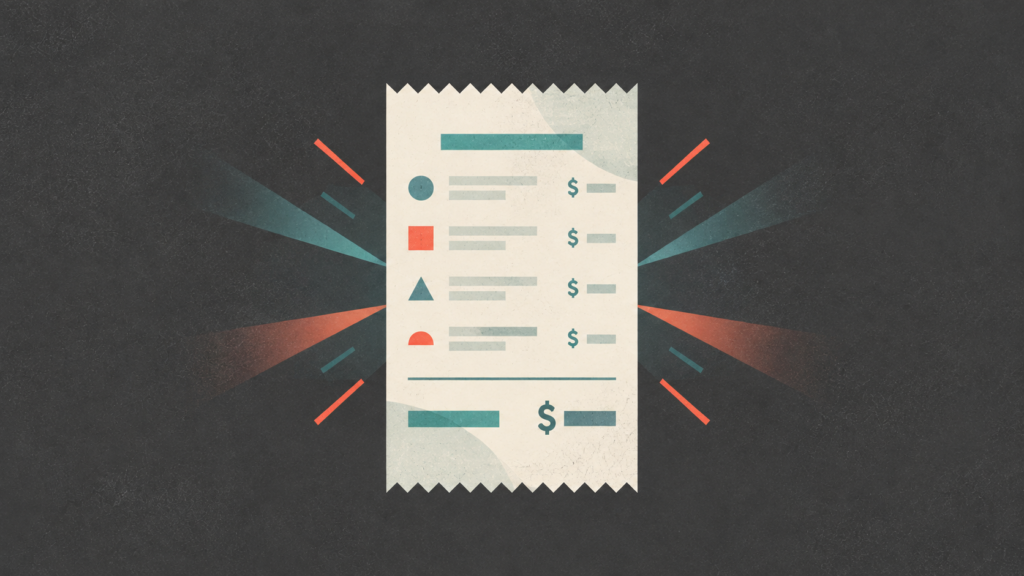
But there’s a serious flaw in that story. 60% of small businesses that borrowed from online lenders said their actual borrowing costs came in higher than expected. For borrowers at small banks that figure was 37%. At large banks, 32%.
So the fast money is also, frequently, the shocking money. And no business owner likes to be shocked.
Two different promises
Every category eventually splits into competing value stories, and small business credit is splitting along an interesting line.
One story is fast. That story is compelling and it’s winning applications. And the data show that 60% of those business owners are dismayed when they get the money and read the fine print. It’s not surprising that those borrowers are the least satisfied with their lender.
The other story is no surprises, and by the Federal Reserve’s own data, banks are already delivering it better. That’s a strategic gift: an emotional benefit with evidence behind it, sitting largely unclaimed in the category’s creative.
Why predictability beats speed for this audience
An owner running tight cash flow doesn’t just need money. They need to know what the money will cost them, so they can plan around it.
A cost that lands higher than expected isn’t only an expense. It’s a hole in a plan the owner built their next two quarters on — payroll, inventory, a hire they’d promised.
That’s why “you’ll know what this costs” carries emotional weight in this category that it wouldn’t carry elsewhere. It’s not a rational feature callout. It’s the difference between a plan that holds and a plan that doesn’t.
And it ensures the bank is helpful in all the most important ways. Not just because they provided funding, but because they did it in a transparent way that empowers the business owner to make an informed decision.
How to say it without overpromising
This is territory that requires care. Nobody should promise a rate they can’t guarantee or imply certainty a variable product doesn’t have. But there’s a lot of ground between overpromise and silence.
Show how the cost is built, not just the headline number. What’s fixed, what can move, what determines which. Explanation is a form of reassurance. We did this for a student loan company and found that people were 6X more likely to apply when they saw how the loan was built, and what they could do to limit interest payments over time.
Let clarity be the creative idea, not the legal copy. In most financial creative, the explaining happens at the bottom in six-point type. Put it in the headline, reinforce it through the product story, and you’ve said something the category mostly doesn’t.
Concede what’s true about speed. Owners aren’t fools. Acknowledging that online lenders are faster makes the predictability argument credible instead of defensive.
The bigger point
Commoditized categories don’t get won on features, because features get matched. They get won on the thing the customer feels — and what an owner feels about credit is mostly anxiety about the unknown.
Reduce that anxiety in the creative, and you’ve differentiated a product you didn’t change.
Advice to act on: Look at where explanation currently sits in your small business lending work. If it’s all below the fold, you’re treating your strongest available advantage as compliance copy.
Sources
Federal Reserve Banks, 2026 Report on Employer Firms: Findings from the 2025 Small Business Credit Survey (n=6,525). https://www.fedsmallbusiness.org/reports/survey/2026/2026-report-on-employer-firms
Ready to break through your audiences’ indifference?
Get helpful information in your inbox